How river DNA can track fish, frogs, fungi and human feces — all at once
- A single water sample can reveal DNA from animals, plants, fungi and even human waste, offering a rapid snapshot of ecosystem health.
- Researchers detected the deadly amphibian fungus B. dendrobatidis for the first time in Ireland, highlighting new risks to native frogs.
- The same technique tracked pollution changes over time, showing a sharp drop in human sewage after a new wastewater plant came online.
A single scoop of water from an Irish river revealed evidence not only of Ireland’s only frog species — as expected — but also signs of the dreaded B. dendrobatidis fungus, marking the first time this devastating amphibian disease has been spotted in the country and exposing a previously unknown risk to Ireland’s frog population.
That is the power of environmental DNA, or eDNA, as revealed in new research led by University of Florida biologist David Duffy, Ph.D., which traced the DNA harbored by the Avoca River from its origin in the Wicklow Mountains to where it spills into the Irish Sea.
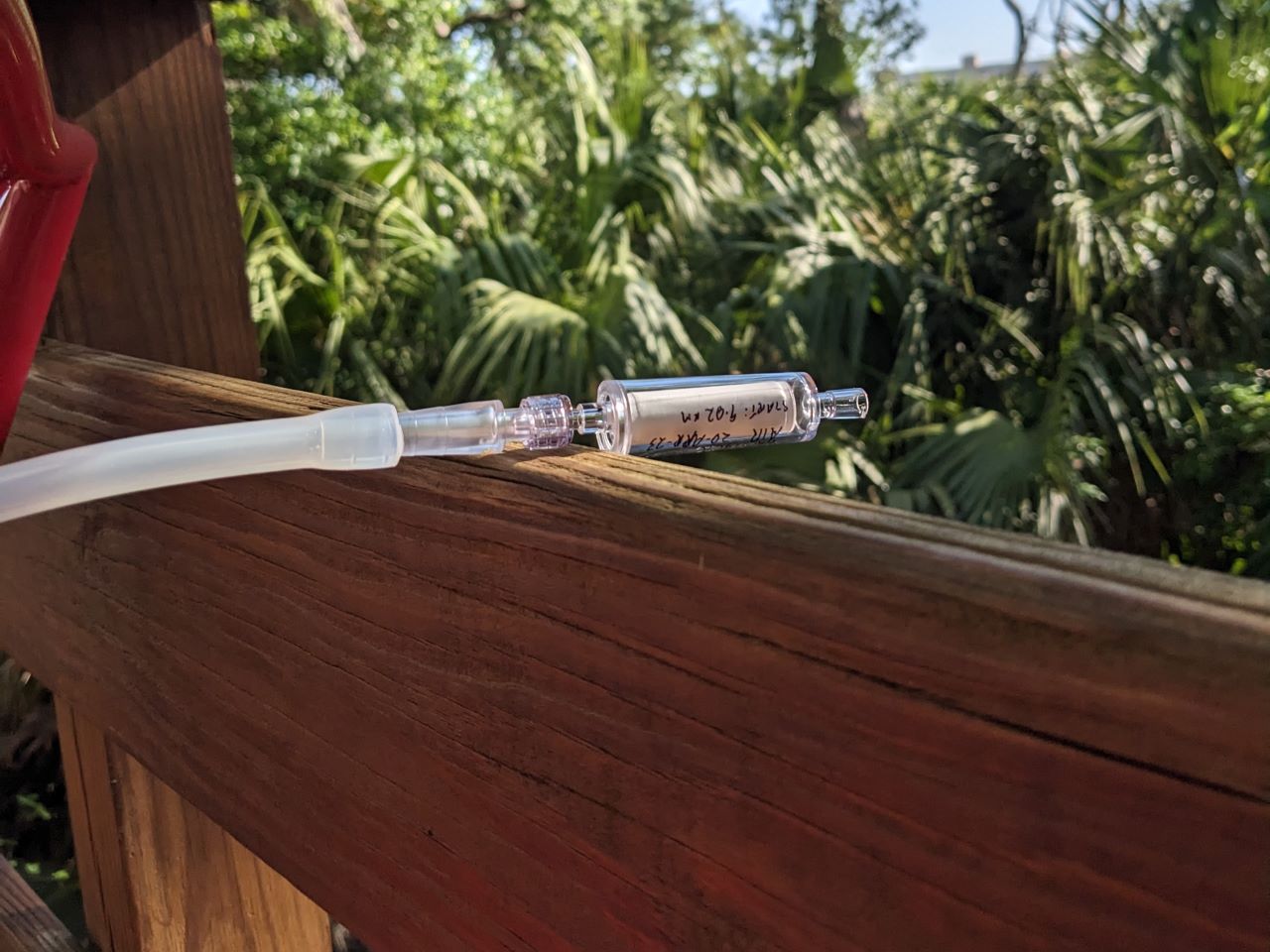
With a single analysis of a sample of water, soil or air, scientists can identify the DNA of virtually any species that has passed near an area. The technology has the potential to massively simplify typically labor-intensive conservation efforts by helping scientists quickly and cheaply identify endangered species, rare pathogens and sources of pollution.
“What we really wanted to highlight in this study was that the technology has advanced so far that we can now, in a single assay, detect all of these things simultaneously,” said Duffy, a professor of wildlife disease genomics at UF’s Whitney Laboratory for Marine Bioscience. “You can look at animals, plants, fungi, microbes and viruses — all in a single test.”
With an international group of collaborators, Duffy published their findings on April 24 in the journal NAR Genomics and Bioinformatics.
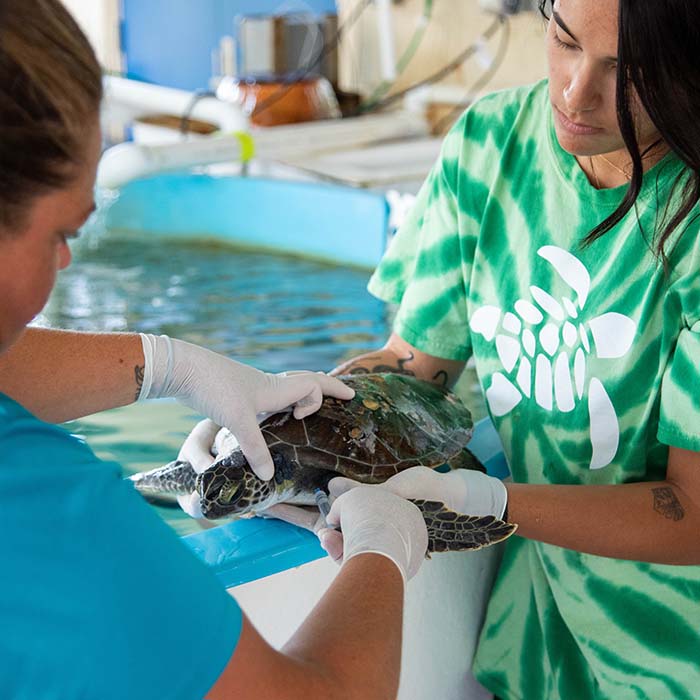
An expert in eDNA, Duffy — who first used this novel technique to study the viral cancers plaguing sea turtles — has continuously tested the limits of this errant DNA for conservation and population health research. His lab has demonstrated that eDNA can track rare animal species, find evidence of illicit drugs floating in the Dublin air and even help analyze human genomics from a cup of water.
In the new study, his team tested how a river can serve as a readout of an entire ecosystem’s health. Wind and rain carry eDNA from the land and air into waterways, providing a readout not just of the aquatic environment but of terrestrial habitats and species as well. Using a method that analyzes all DNA in a sample simultaneously, they identified species representing viruses and bacteria up to fish, amphibians and mammals: from aquatic animals like otters, to the pigs, cows and sheep on farms, and pet cats and dogs. Even leatherback sea turtle DNA was detected.
The researchers could also trace changing sources of pollution. In 2022, samples near the town of Arklow had abundant human fecal DNA, evidence of the untreated sewage spilling into the water upstream. By 2024, when the town opened a new wastewater treatment plant, these signs of pollution plummeted.
“We could actually see the point where the wastewater was rerouted and no longer entering the river,” Duffy said.
Because a single test can analyze nearly all species in a sample, eDNA techniques could help conservation managers identify where to spend more resources tracking rare species or pinpointing sources of pollution.
“This isn’t about replacing traditional approaches — it’s about guiding where to more effectively use them,” Duffy said. “With this approach you can do a low-cost sweep over large areas, and then make a data-driven decision about where to invest more targeted efforts.”